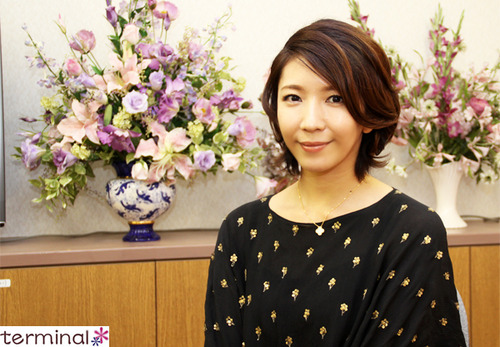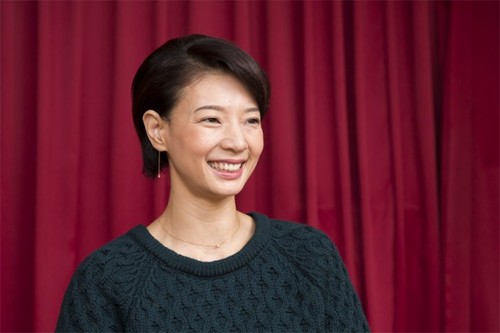
The Musical “Omohide Poro Poro” Starts on February 2 in Osaka! Interview with Asami Hikaru, Starring as Taeko

Original Japanese interview courtesy of WalkerPlus. First half is here, second half is here.


Studio Ghibli’s first musical production will be performed in Kansai. Based in Akita, the creators of this original musical are the Warabi-za company, a theatrical troupe that tours the whole country. The musical “Omohide Poro Poro” was first performed in 2011, and in 2012 went on national tour. The 2011 Warabi-za Tokyo performance featured former Takarazuka otokoyaku top stars, with Asami Hikaru starring as Taeko, and Mori Keaki playing both Taeko’s mother and the grandmother in Yamagata. This time for the tour finale, it will debut in Osaka and return to Tokyo.

The story takes place in the summer of 1982. One day, 27-year-old office lady Taeko sees her 5th-grade self appear before her. Utilizing her summer vacation, Taeko leads “herself” on a trip to the Yamagata countryside…

The movie’s story is being revived in a musical performance. We asked Asami Hikaru to share her thoughts about the production.

Q: Can you tell us about your decision to perform in this show?

I’m from Sendai, the story of the show is about Yamagata, and Warabi-za uses Akita as its headquarters, so therefore, somehow  I immediately got the sense that Tohoku was calling me. And truly, I was moved to answer quickly. Shortly before the first rehearsals started in Akita the 2011 Tohoku earthquake happened, and I thought ah, this didn’t happen by chance, it was surely fate that I would inevitably perform in this show. Even though at the time that I accepted it was really an unforeseen diversion, from then on I thought that it was really important that I do this show. When I was given the opportunity to take part in this production after the earthquake, I thought it was something truly necessary for me to do for myself, and now I still really think so.

Q: How did it go?

I was able to perform very freely, but day after day, it was like my heart was being cleansed. Nature is such an important thing, and even though I think everyone feels this way, it started to hit closer to home, or how should I put it… I got the sense that it began to influence me in an unconscious way,  and I began to love nature more and more, and I grew to like rural areas. I work in the city, but when I have time I’ll go somewhere in the countryside, and even though it might only be a short trip, I can recharge just by breathing the air and strolling. I began to long for this kind of time more so than before; it really increased. Therefore since the middle of the previous Tokyo performance, I’ve thought I definitely wanted to do the show again, and Mori (Keaki)-san and I talked about it together.

Q: Have you seen the movie? What do you think about the stage adaptation?

I love Ghibli films, so of course I’ve seen it. I’m a Ghibli fan, and Nausicaa of the Valley of the Wind is my favorite, but I’ve seen all of Hayao Miyazaki’s animations and Isao Takahata’s works. I’ve also seen Heidi, Girl of the Alps and Conan (hehe). So I was also thinking how on earth are you going to turn this into a stage show? While we were going through rehearsals, each and every time I thought, “Oh, so this scene is being done like that,” and “Aaah, I see.” Some scenes are made differently from the animation, like when the 2nd year high school girl who plays childhood-era Taeko and I have conversations together; Kuriyama Tamiya-san’s direction is very interesting. So it’s full of scenes that make me think “Ah! This is so Ghibli!!” (haha). Naturally there are also scenes that are the same as in the animation. During rehearsals, I was admiring how well done it was. I think there are absolutely things you have to be a Ghibli fan to understand, and the director is. Therefore, I think Ghibli fans will be able to enjoy it twice as much. There are so many scenes I absolutely adore, and ones that are quite Ghibli-like as well.

Q: What are some scenes that you wanted to see, or that were especially enjoyable?

When Taeko goes to Yamagata and has a conversation with the local people for the first time. Here I think even the audience all at once has the same point of view as Taeko, and strongly gets a feeling of “Wow, we’ve come to the countryside!” I keep thinking, ah, they’ll be able to see that again, and I’m so excited. After that, the scene with Warabi-za’s Japanese dance festival band is really magical. It’s incredibly cool, but the dancers gradually become more scary-looking. There, my own feelings and Taeko’s troubled state of mind overlap each other. Reflecting on it now, I think that’s really amazing.

Q: Since it’s you who’s playing Taeko, are there also dance scenes?

Yes. One scene was made. In the scene where I’m helping to pick safflowers, I put on work pants and dance. The sun rises, and Taeko dances with happiness while the safflowers are glittering in the light. It was put together so fantastically, and when I was able to do it, I thought ah, so the show turned out like this, and I was very impressed.

Q:  Sounds like fun! How did the audience react the first time?

It is fun. So much fun. It’s truly a magnificent production. I think the guests probably had more feelings along those lines. In the last Tokyo performance, we didn’t specifically include comedy, but everyone laughed a lot, and said it was extremely enjoyable. I was always giggling too while I was watching from the wings of the stage. I had to keep leaving, because I had to change my clothes 2 or 3 times. Even so, everyone found the theme easier to understand than in the animation. It was easy to convey and easy to understand. Even the last scene, the way it ends is the same as in the movie, but it might be clearer in the stage version. In the last scene, everyone starts crying naturally. There were a lot of people who said, “Warm tears really started dropping down, huh.”

Q: Taeko’s image suits you perfectly.

That’s what everyone tells me (haha).  My parents’ house is sort of in the mountains of Fukushima, so I was familiar with the countryside from a young age, but since I became an adult I’ve only lived in the city. Since I also have the same sorts of feelings as Taeko, it’s been truly refreshing each and every time I’ve played her. So, it’s fun. Taeko gets tired of work and says oh, I’ll take a summer holiday, and goes to Yamagata. I think there are a lot of women who are worn out from their jobs, unmarried women who are living in the city and really doing their best with all their effort to make a living, people who would say “that’s exactly how I feel right now.” Since I also naturally have a lot of aspirations, I can sympathize. Truly, I feel like I understand. I’ve never been an office lady, but I can understand ah, they have times like this. Being 27 is tricky isn’t it, when you’re being told various things like you have to get married, but you’re doing your best to play an integral role at your job. I think the psychology of women in delicate situations like that comes through, and even though it’s just an animated movie those feelings are so real.

Q: Is there something you would like to convey through your performance?

The most important thing is something incredibly simple, that humans are living within nature, that each person is part of nature. So you’e living with your feet on the earth. I think this musical sets you up to think about these sorts of things anew. The way it’s interpreted by the people who see it may be different, but I think the theme of the production is how humans and nature face each other, and for each and every human being to find the simplest and most valuable way of life. So every day I’m deeply moved. In the dialogue and the songs, just about everything really, I feel the same way as Taeko. While I played her I was emotional every day.

Q:  So you must be happy that you can play her one more time.

Yes, so happy. I’m looking forward to it. I really think it’s a privilege, and I’m truly happy to be given the opportunity to be accepted into Warabi-za. Everyone is straightforward and genuine above all else. The energy they put into this one show, I have a strong feeling it’s even more than those working in Tokyo.  It’s something Mori-san has always said, when we’re here our spirits are cleansed.  When you produce a show genuinely it turns out sincere. Where rehearsals are, although the previous time it was April, we were immersed in Mother Nature with snow still left on the ground. Certainly the environment helped too, and I’m full of truly wonderful memories.

Q: So Omohide Poro Poro has become an important production for you?

With things being the way they were, I was invited by Warabi-za, doing their best as a theater company to make local Japanese musicals, and so we made an original musical that was truly purely made in Japan. There really aren’t too many like that. I think it’s important and I want to continue doing Japanese-made musicals like that, so from now on if I have the opportunity I think it would be nice to steadily do more of them. As for musicals, after all they tend to be flashy western stories, but I want to do more Japanese stories for Japanese people about Japanese people, and in the midst of creating this run of Omohide Poro Poro I’ve been talking to the staff about that constantly.

Q: Since you re-watched the DVD beforehand, how do you think it’s going?

Watching the DVD in preparation, it’s unmistakably interesting. Making a movie into a stage show, generally when fans see it, there are lots of times when they think, “Eh?? That’s totally wrong!” I also feel that way often, but, really, this time I don’t at all. Since I’m saying this as a Ghibli fan, you can depend on it (haha). In the last scene, even I get a feeling of purification every time; it’s really a mysterious production. When they see it, I think all the guests will become good people (haha). I think it’s a musical that teaches you to keep living facing forward without standing still. So, if you’re a Ghibli fan, please come to the theater!

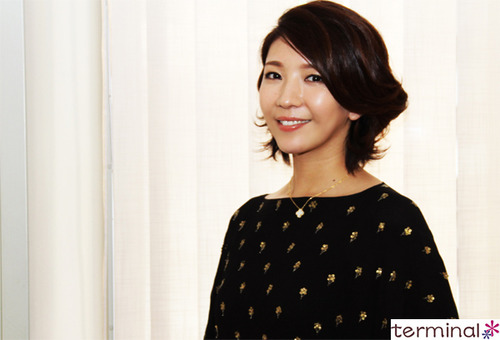
“Kuzariana no Tsubasa” – Kozuki Wataru Interview

Original interview here.


“Kuzariana no Tsubasa,” the most recent work in the drama series “Chikyu Gorgeous” supervised by Kishitani Goro & Terawaki Yasufumi, will be performed at the Akasaka ACT Theater starting on January 8, 2014.

Approaching their 20th anniversary, these two are extremely popular for creating singing, dance, and laughter-filled entertainment, and in this performance Kozuki Wataru will be making a guest appearance. The setting is a fictional country called Jameria which is bound by 4 social classes, and in this large-scale production that illustrates the pictures of various people desperately living in defiance of each of their fates, the brilliant popular talents Nakamura Masatoshi, Kazama Shunsuke, Yamamoto Yusuke, Miyazawa Sae (SNH48), and Satou Eriko in addition to Kozuki will all appear together. Prior to this performance, we asked Kozuki, a huge fan of Chikyu Gorgeous since her Takarazuka days, to discuss her feelings about “Kuzariana no Tsubasa” and the 100th anniversary of Takarazuka.

Chikyu Gorgeous, Thrust at the Origin of Entertainment

—Kozuki-san, you’re well known for being a fan of Chikyu Gorgeous, and during the press conference you talked about it passionately.

I got ridiculously excited (haha). I was told to conduct myself exuberantly at the press conference, but truly from the moment I stepped out under the lights and music, I was able to talk passionately (haha).

—I want you to talk about the magnificence of Chikyu Gorgeous one more time.

Singing, dancing, drama, fighting, tears, laughter… it condenses the entire true charm of theater into its world, and I think it’s the ultimate form of entertainment. Kishitani (Goro)-san also talked about this, but there are themes concerning these times that everyone has to think about, and as for me every time I finish watching it I get a sensation sort of like threads being unwound inside me. I think it’s the kind of entertainment that gives me courage, like I’ve advanced one level from where I was before.

—That seems like something you’d have encountered during your time in Takarazuka, right? Since you’re in a position to deliver your own hopes and dreams, it just feels a little bit surprising.

Precisely because I had the privilege of appearing on stage every day, I feel like I’ve been thrust before the origin of entertainment a second time. What I really want is to jolt the emotions of the people watching in this manner. Chikyu Gorgeous was the show that renewed my conviction that this is the road I should be progressing along.

—Including video recordings of past performances [of Chikyu Gorgeous] you’ve seen all of them, but which is your favorite?

For sure, “Claudia” (from 2004), the first one I saw live, left the biggest impression. The use of music by the Southern All Stars, and the appearance of the now deceased Minako Honda, still remain in my heart.

—This time for “Kuzariana no Tsubasa,” you play two parts, and there’s a little bit of a trick, isn’t there?

That’s right. But right now, that’s a secret (hehe), and there are also many other parts that I’m not allowed to talk about. Please look forward to going to see it (haha).

—According to Kishitani-san, you possess two kinds of appeal from your time in Takarazuka.

That is what he said. Kishitani-san is the sort of director who can draw out both the quintessential aspects of a person and the parts that he/she has never shown before, and since this time also it’s an original work that Kishitani-san was able to write, I think I ought to lay my heart bare and plunge in.

“Kuzariana” means “Rebirth” in Swahili

—Concerning the play’s story and your own characters, what sort of image are you keeping in mind?

I was wondering what the “Kuzariana” part of the title means, and it turns out its meaning is “rebirth” in Swahili. I think this is a relevant theme that Kishitani-san fell in love with, and while the characters are each dealing with various class struggles, they collectively grab hold of a new dream. Within this sort of human drama, I think there are a lot of parts you can sympathize with and a lot of elements that give you courage. In the story, I’ve been given the opportunity to play both a character of the second highest rank and also the lowest rank, but even though it’s the first time I’m playing two roles, I want to enjoy myself.

—Working with Kishitani-san and Terawaki-san, is there anything that has been particularly enjoyable?

With Kishitani-san writing, directing, and performing in the show, I think he’s given himself a difficult amount of responsibility. With him shouldering that much responsibility, by the time we arrive at opening day, I wonder what kind of study I’ll have been able to accumulate… I’d like to follow him very closely. Every time, I wonder how we’ll be able to become such a cohesive team. As someone who has also produced shows, I have all the more interest in that. As for Terawaki-san, how should I put it… he’s the sort of person that makes you feel relieved. The two of them are kind of like a married couple (haha), and I think Terawaki-san is the one who stands by in support and creates a calming atmosphere. But the sparkle in his eyes when things get serious is amazing, and I think I’d like to be beside and closely observe the Terawaki-san you can only see on stage. Moreover, my heart is filled with happiness at having the privilege to participate in the Kishitani/Terawaki-produced Chikyu Gorgeous series that has had reason to continue for 20 years, and I’d like to perform wholeheartedly.

—What about your co-stars?

There’s really been a fantastic atmosphere ever since the press conference. Nakamura Masatoshi-san talks to everyone extremely calmly, and when he greeted me for the first time I thought, ‘Wow, he talked to me!“ and I was overjoyed (haha). In spite of the fact that he’s such a big star, how should I put it… he’ll spring to lend a hand, or step back when necessary. The significance of the top-billed person being this way, I think it creates a very gentle atmosphere and an incredibly warm company. When I first saw Kazama Shunsuke-san in “Claudia,” he left a very stoic impression, he’s someone who has an absolutely incredible ability to concentrate on his performance, and I think he’s someone who definitely has the image of an actor. Since I have the privilege of working so closely with him this time, I feel honored! Yamamoto Yusuke-san, more than anything from watching him on TV I got the impression that he was “big-boned.” Although he plays a villain this time, his fresh face gives you the feeling that he’s got a heart. He’s someone with an extraordinary number of faces. Miyazawa Sae-san, as expected of an idol, is ridiculously cute! She’s straightforward and she shines with all her might. As for Satou Eriko-san, she has an air that’s exclusive to her. When I met her she was practically even more slender than I’d thought, and she’s a very feminine person. But, she’s someone whose conversation isn’t very flowery, and that gap is lovely.  I’m truly happy that I’m able to take part in such a lovely company with so many different charms.

The Feeling of Wanting Everything Fostered over 25 Years to Come Out

–By the way, since the 100th Anniversary Ceremony for your old home Takarazuka is finally approaching, would you share your thoughts on that again right now?

In 2013, through performances like DREAM LADIES and DREAM, A DREAM, I had the privilege of performing in a lot of shows with OGs, and being able to spend time once again with all the fans who were looking forward to that, I thought, ah, this is true happiness. Since Takarazuka has continued for 100 years, the performers span an extensive period, but all of those people are linked together by Takarazuka, and just like that we become a single company. I think Takarazuka is really amazing in that way. Therein once again, as a graduate myself, more than ever, if I can’t perform activities that live up to the name of Takarazuka, my heart feels tense.

—As for one of those activities obviously you’re going to perform in your beloved Chikyu Gorgeous, but as the actress Kozuki Wataru, what do you want to become going forward?

2014 will be the 8th year since I left Takarazuka, and my 25th anniversary since my debut. Because they were consecutive years, I think that’s why I have the privilege of doing Chikyu Gorgeous, and why I’ve been able to give it my all on my own up until now. Everyone from the Takarazuka world who has been cheering me on, I’ve come to depend on them tremendously. Next year I’ll also be participating in in a performance called “Celebration 100! Takarazuka ~This Love is Eternal~” as well as the ceremony before that, so it’s with love and thanks in my heart that I’ll be participating. Right now first and foremost, approaching this Chikyu Gorgeous production, I’d like my maximum potential and everything I’ve fostered over the past 25 years to come out, and if I can do that I want to show a fresh Kozuki Wataru. What I mean is, right now with “Kuzariana no Tsubasa,” I want to strive to give it my best effort and work up a storm, and put my thankfulness for being able to perform into my performance.

Sena Jun Long Interview Part 2

Original interview is here.


Continuing from the first part, we ask about her present mindset!

Continuing from the first part, we are publishing the second part.
In part one, the topic of her concert was the center of the discussion, but in part two we will discuss things like Sena Jun’s current mindset, what she’s into now, and a lot of things you wouldn’t normally be able to hear.

I inquired about her present mindset, and starting with the concert “ALive Final ~Handsome Woman~” that she was able to tackle after her half year off, I began looking forward to her future activities more and more.

Please be sure to look at the first part of the interview as well.
And if you’re interested, go see “ALive Final ~Handsome Woman~” !

Things she’s into!

—The first half of this year was the first time you took so much time to recharge.

That’s right. Since the time I was in Takarazuka and including the time after my retirement I was so thankful for everything I came to be always racing tirelessly around, so I was supposed to be doing this job for love, and yet there was a part of it that I began not to understand. Like, “Am I doing this for love? Am I doing it in order to make a living?”
I came to really detest myself for thinking that way, and for a moment I was tempted to save up money for getting a fresh start. With my activities up until now I’ve had a feeling like I’d used up everything inside myself, and I wondered if there wouldn’t be consequences brought upon me. That’s why I took sort of a longish break.

—Starting a new life (with your marriage at the end of last year), you had new motivation.

During my break I saw shows and I reaffirmed, “Ah, I really do love the theater,” and I started experiencing feelings of “I want to perform” once again.

As for travel, because I have a dog I can only go to nearby places, but up till now I’ve still enjoyed my different lifestyle.

—You also do things like cooking. What’s your specialty?

I do it normally (haha). I don’t really have a strong point with cooking.

—You have an image like cooking would be your strong point. You skill level seems good.

I don’t know whether or not my skills are any good, but because there is an extremely meticulous side of me I want to cook with the kitchen in a clean state. To start at the outset I cut and prepare the ingredients and begin cooking from a state similar to what would be on a television food program.

—You understand beforehand what to put in the bowl, huh. Are you the type who measures amounts exactly?

As for that… I measure by sight! (haha)

—What kinds of things do you cook a lot of?

Normal meals. There is something I like, if I do say so myself… I like the green curry I make the best!

—So then… “GRAND OPENING! Sena Jun makes green curry!”

Oh no (haha), it’s really simple.
During the time that I was appearing in shows, I learned how to cook from my co-actors who were really good at it. I’m especially pleased when something is delicious because it’s simple.
As for the green curry, it was made with chicken and eggplant, but mine is different.
I make it with potatoes, carrots, onion, and pork. I guess because those are household ingredients. My favorite part is that I put in a little bit of honey.

—Sounds delicious! Do you have any other menu recommendations?

I have one more thing to say: please look at Cookpad!! (haha)
I also tried making easy spare ribs and other things, and they were excellent. So, everyone please try consulting Cookpad.
Ah, I remembered. Another delicious one was “Chinese cabbage salad.” You have to wring out the boiled cabbage. While saying “Aah that’s hot!” (haha)
It takes a bit of work, but that dish is also really delicious.

—Next time, I’ll try making it. How did you arrive at that dish?

I had Chinese cabbage in the refrigerator, so I looked up Chinese cabbage recipes on Cookpad and found it (haha).
Since I do most of my cooking with what I have in the refrigerator, there are a lot of things that can be cooked quickly.
Recently, since I had beans and eggplant leftover, I thought, “Today it’s summer vegetable curry!” and submitted that, and because it was super delicious I could have eaten it all. Actually because I put in things from the refrigerator it was “leftover curry,” but as you might expect that doesn’t leave a very good impression, so I called it “summer vegetable curry!” The naming is also important.

Disney Sea

—While you were relaxing, what else did you get into?

Actually, I’m not very good with crowds. So I’d just about never been to Disney. As for Disneyland, when I was in high school, there was a vacation for the anniversary of the founding of the school, so I thought I’d go with everyone if it was less crowded at that time. Since I didn’t have an interest in characters then, I enjoyed experiencing the attractions.

After that, when I was a ken-2 I also went in the evening with my classmates, Haruno Sumire (a year above me) and 4 of her classmates. I think it was probably after a Nippon Seinenkan performance had ended, and I haven’t been to Disneyland since.

One time Mihoko (Ayano Kanami) invited me to Disney Sea. But it was right during the Elisabeth performance or something, and since my head was already full to the limit with performance stuff, there wasn’t much room for enjoyment. That time, I thought Mihoko was being kind of cruel.

And so, recently I went to Disney Sea. Just as I entered the parking lot, a young man and a young woman called out “Welcome!” with smiles, and I was really glad to experience that.

—Since the appearance of the world is important for a theme park, you feel the spirit of their hospitality, don’t you.

That’s right. From the moment I entered I was already deeply impressed by the reception. How wonderful, I thought. When you leave your car they call out “Have a good day!” and in the place where you buy your ticket they interact really pleasantly, everything is tied together in order to please and to be entertaining, to be honest I just took notice of it at my age.

An acting colleague told my husband, “Even though you have this job you absolutely should go to Disneyland and Disney Sea!” He’s also not the type to go to that sort of place, and since I’m also not the type to be interested in that at all I went while thinking “I wonder how this is going to go,” but I really did get excited.
Not only the employees were smiling, but even our fellow visitors were waiving to the people riding the train, and calling out greetings. I think that sort of thing is really nice.

I immediately entered a shop. And then, I put on Minnie ears!! (haha). My husband put on a big Mickey hat (haha).

—Oh!! That’s amazing. Even though you had no interest before, you went that far all at once!

While saying “Aw yeah!!” (haha). I thought it was a really great experience. I came to have the attitude of accepting those things, so that was the first time I was able to feel entertained.

—I want to see you like that! (haha)

Oh really… (haha)
Someone who we were with the time that my husband’s colleague told him “Even though you have this job you absolutely should go to Disneyland and Disney Sea!” coincidentally appeared at Disney Sea. He saw us from a distance seemingly laughing, and rather than calling out to us then and there, he told us about it later. That was a little embarrassing! (haha).

—Maybe it was hard to call out because you looked like you were having too much fun (haha)
That might be it (haha)

Takarazuka

—Jumping to another topic, the significance of delighting guests is the same for Takarazuka. Next year it will reach its 100th anniversary, but as someone who has experienced being a top star, please tell us one more time your “thoughts about Takarazuka.”

If I were born again, I would absolutely want to be a Takarazuka otokoyaku. And I’d want to bask in the spotlight (haha). It’s the same as Disney, isn’t it. From the moment you get off at Takarazuka station, the world of Takarazuka begins. To that extent there is nothing else like that magnificent world.
So as far as I’m concerned, being in Takarazuka is something I can truly be proud of.
I think I’m proud just to have been there, but moreover I’m also thankful to have had the privilege of being top. I think I would like to continue contributing to Takarazuka from now on.

Since I’ve finished with it now in my life, I don’t have any regret or remorse about being an otokoyaku.
Now I’m enjoying myself only as a fan. I even went to see “Rose of Versailles” recently, it’s really the greatest!
Among those who haven’t seen it, I think there are people who are prejudiced against it without having tried it, but I absolutely want you to see it once. Because it’s me, caught thinking I disliked Disney, I want to emphasize these things!

Whether t’s a sorrowful story, the sordid story of a love triangle, or a great romance, at the end everyone descends the Grand Staircase with a smile. Isn’t it such a dream world? The otokoyaku construct the ideal male image, and the musumeyaku construct the ideal female image. I think the otokoyaku are not so much men as so-called “otokoyaku” beings, and the musumeyaku have to conduct themselves in a way that supports that, and also in order to appear more cute. I think that sort of world is lovely.

It’s said that the system of hierarchal relationships is severe, but they teach ordinary things such as how we should greet our superiors properly, how we should show our superiors respect, etcetera.
During music school in particular, even taking age into consideration there is a portion where children are teaching these sorts of things to children, so I think there it’s also a somewhat difficult situation.
You feel the importance of the traditions that are continuously passed down, and I think I’m glad that I was brought up so strictly.

The hierarchal relationships are unchanging even if you quit. I perform together with people from Takarazuka in various shows, and even if the era is different and even without the experience of co-starring, there is a feeling of camaraderie just by virtue of having been in Takarazuka. I’m happy that I’ve been able to experience an existence like that.

My great superior Koshiji Fubuki was able to perform her roles, and since I believe that now I have the privilege of working in this way precisely because my seniors carved out such a path, I think I too must work unabashedly in order to carve out a path for my juniors.  My own capacity is by no means sufficient, but I want to maintain that awareness.

Letters

—Once again, what your fans mean to you

I’m extremely grateful to them.
I think there were a lot of people who had various feelings about my marriage.
Concerning those who had supported the otokoyaku me, I guess there were people who thought their dreams were broken…
I was grateful that they said “congratulations” nevertheless. After this I think I should continue to provide entertainment to those who support me. Because that is all I’m able to give them in return.

—After your recharging period, I wonder about your determination from here on out.

Particularly during my time in Takarazuka there was demachi and irimachi, so I think there were a lot of opportunities to meet people, but after I left it got to be so that I couldn’t spontaneously make those appearances. Because it’s different from Takarazuka. Even though there is this change, I’m extremely happy that people are following me.

As for accepting letters these days, I think I don’t do it as much, but receiving letters sent to the office and to the fanclub, I think that’s something that also makes me happy. Honestly even if it’s a situation where I don’t match a face and a name, I match the writing in the letters to a name. Even if I don’t see the sender using the words “Sena Jun-sama,” I understand what sort of person wrote them. It’s been that way all along since my time in Takarazuka.
Perhaps there might be people who think I don’t read them, but I read them all. And while I’m reading them I think about how truly grateful I am.
Please continue to support me from now on!!

Sena Jun Long Interview Part 1

Original interview here


We asked to talk about her concert “ALive Final ~Handsome Woman~”
In the future, we will publish part 2. Please look forward to it!
7/16/2013

Sena Jun’s concert “ALive ~Handsome Woman~” will be opening soon in Tokyo and Osaka. “ALive,” the first installment in May 2010, was Sena’s first concert after leaving Takarazuka, and then a year later in April 2011 she performed the second installment.
That time there were issues immediately following the earthquake, and Sena experienced various conflicts within herself, but she shortened the length of the performance, and after the show began holding fundraising activities.
Since then about 2 years have passed, and this version of “ALive” is serving as the final performance.

Sena Jun spoke to me about her hopes for “ALive,” how she spent the first half of the year recharging her batteries, and her current mental state. It will be published split into two parts!

As for me, it’s been a while since I’ve been able to talk leisurely with Sena, so it was an enjoyable time.

Healed by her gentle smile, through her words I strongly sensed her intentions regarding her current honest feelings and how she wants to live moving toward the future.

What I thought after the interview… Sena Jun really is a “Handsome Woman!”

—Finally, it’s almost time to raise the curtain for “ALive ~Handsome Woman~”. What sort of preparation are you doing now?

This time, I thought I’d like to respond to fan requests, so I did a survey. As a result, I got a lot of requests like “I want to see a scene from the first or second ‘ALive’ performance!” and so I’m doing this with the purpose of reviving those scenes.

—So does that mean you’re rehearsing while watching and remembering video recordings?

That’s right. When I look at the footage, I think I was so young… haha. Although only three years have passed. Since it was right after I left Takarazuka there was still a considerable amount of otokoyaku left in me, and now I think it can’t possibly be OK to do the same things. When I watch the footage from the second performance, it has a bit of a different feeling from the first performance, and even I noticed that it lost some sharpness. As an actress… when I think about that, I wonder whether the change was good. Looking back on it afterwards it I felt that way, but I believe that all different moments have their merits! Doing a revival, I’m kind of nervous, but I think I want to make it enjoyable to see my current self.

—Now, doing this revival, is there anything that has caused you trouble?

Not yet. After this I’ll be starting the choreography of the new scenes, so I think that’s when it will become difficult.

—For the poster photo, what sort of image did you have in mind during the photoshoot?

image

In accordance with the subtitle, it evoked “Handsome Woman.” That’s the sort of image I’m currently thinking about. It also coincides with the program photography, but the outfit on the poster was the simplest. It’s designed so that the line of the “A” made the shape of a wall, but since only my back and the back of my knee are actually leaning on a wall, I’m supporting myself with my abdominal muscles. So because I was holding a pretty unnatural posture, to tell you the truth my abs were quivering (haha).

—Yet your face is cool as always.

Oh yeah, it’s cool! (haha)

—Continuing from the previous installment, this one is also directed by Yamada Kazuya, right?

I’ve had the privilege of talking with him many times before, and I’m looking forward to his participation in rehearsals from tomorrow on.

—Did you come up with the ideas yourself?

For part of the planning I was allowed to come up with various ideas for things I wanted to do. Like which pieces of music I wanted to use, what sorts of scenes I wanted to do, what kind of dances I wanted to do… it expanded from there.

—As for the origin of those ideas, what sorts of places does your inspiration come from?

All the usual places. Music flows unexpectedly from everywhere. When I’m in a cafe if I think “Ah, this is a nice song” I ask an employee, “What is this song called?” and they’ll show me the CD. Since I didn’t really get to dance a tango the second time around, this time I think I want to dance to a piece of tango music using KAZUMI-BOY-sensei’s choreography.  Because of the choreography I’m excited about it.

—What kind of song will that be?

I REALLY love a piece of music called “Adios Nonino” (composed by the Argentinian Piazzolla). However, later I learned that it’s a somewhat inauspicious song that translates to “Farewell, Dad.” Apparently the composer wrote the song as a dedication to his late father. When I learned the meaning I thought, “I’ll have to pass on using that song after all,” but right at that time I was watching a television program. The person who was becoming the bride of the Crown Prince of the Netherlands was of Argentinian descent, and the woman’s father had a background of involvement in dictatorial politics, so it seemed that the condition for her being allowed to marry the Crown Prince was that her father did not participate in the wedding ceremony. So then on the wedding day, the song “Adios Nonino” played, essentially as her father walking her down the aisle. I guess her intention was to walk saying, as an Argentinian, I’m marrying into another family, thank you for raising me until now. When I saw that real-life episode on TV recently, the thoughts I was having within myself settled.

I also had an event that made me think I need to be emotionally self-reliant, like when I got married (the marriage was at the end of last year) I thought, “From now on, I’ll try to be more independent!” So I think that’s why I determined I would dance to this piece of tango music. Rather than treating it as ominous, I decided to take it that way. With the timing of seeing that TV program I felt that there was a connection, and I thought I wonder if I can use that song after all. I think people might not understand without hearing that explanation, but as for me I chose that music with that sentiment.

—Even just hearing your story now made me teary-eyed.
I wonder if there weren’t a lot of people who were surprised to see the title “ALive FInal ~Handsome Woman.”  I guess the title comes from what you’re feeling.

My “ALive” shows have a fan appreciation component; I want to convey, “Thank you for supporting me during my time in Takarazuka, please continue to support me from now on,” and I decided on the concept of a concert for leaving behind my otokoyaku style. Rather than leaving behind my otokoyaku image forever, the feeling that I wanted to sort of evolve to the next level grew strong, so as for “ALive” I thought I’d try to make this the final time. From now on I won’t be doing any more otokoyaku-like things, but it certainly doesn’t mean this is the final concert. For “ALive Final,” I would like it if the fans were able to think, “I wanted to see something like this!”

—Thinking back once more on the “ALive” versions up till now…

The first time, even though I had just left Takarazuka I felt so fortunate to have the privilege of doing that type of concert. I love singing while dancing, and I particularly like trying to sing while out of breath after dancing (haha). So I really love doing shows. With every year that passes, apart from my stamina my dance skill might fall, but I’m considering that I want to show good things at the right moments without overdoing it. That’s why stepping away can also be a good thing. I thought I’d try to make that the last time I did a form of “ALive” that had my Takarazuka otokoyaku memories, so there is that sort of feeling.

The second time, rehearsals continued right after the earthquake, but the whole time I was thinking I wonder if it’s really OK to open… The president of Toho at the time decided, “Performances started running again immediately after 9/11 in New York. Therefore, now you absolutely must do this,” so we opened. Myself, having experienced the Great Hanshin Earthquake of 1995, I knew the pain of having no food or electricity, so at a time when so many people were suffering I was conflicted about whether it was OK to open, if people would be able to enjoy themselves; but at that time the president said, “Alright, let’s do it!” He thought that at such a time, nourishing people’s hearts was important. It wasn’t lip service; he really thought it was needed. Since it was an unstable period for the transit system, originally the show was supposed to be organized into two parts, but we remade it into one part so that people could get home a little sooner, and also so as to decrease the amount of light used because it was a time when we were told to conserve electricity. At the beginning, people from the Tohoku area were telling us that they had purchased tickets but were not able to visit,  so naturally there were people who canceled, yet a lot of people still came and I was deeply moved. I was feeling like, “If only there was something we could do…” so after the performance we held a fundraiser. I thought, why don’t we listen to people’s voices in person and pass on our feelings.

 —Also contained within the title “ALive,” after the earthquake, people generally started thinking about things like “How should I live?” and “How do I want to go forward in order to live life being true to myself?” again. There were even reports that wedding rings were selling well.

I also thought not about “what do I have to do?” but “what do I want to do?”

—”ALive” has come to have huge significance in your life, hasn’t it. You’ve reminisced about the past, had the chance to fortuitously meet a good partner, and you’ve also made a connection to the future.

That’s right. Over the course of doing the same concept for a concert three times, I was able to notice the changes in myself. With it being several years since my graduation from Takarazuka, I think this time there are the biggest changes. Being able to experience that objectively, it was really enlightening.
—This time you’ll be performing at Tokyo International Forum and Sankei Hall Breeze (Osaka), which are different venues from last time and the time before.

Because Tokyo International Forum is a place where I’ve always felt in my heart I really wanted to do a concert, I’m happy that we’re able to open there. Actually, since I made a guest appearance in “M. Kunze & S. Levay’s World,” I remember excitedly exclaiming to the other dancers in my scene,“ Oh my gosh oh my gosh I made it to the International Forum!” While everyone was softly singing the music in dresses, during “Ai to Shi no Rondo” and “Saigo no Dance” I was dancing and shouting crazily with the other Tod dancers. That was incredibly fun and exciting (haha). The audience reaction during the other songs was a little apprehensive; there was a sense of  “I just saw something curious…” in the atmosphere (haha).

—So in your next concert you can perform in the International Forum to your heart’s content! Since you like lighting so much, you can bask in the spotlight as much as you want (haha).

To my heart’s content! That’s funny! (haha). Yes, that’s right. During the preparatory meetings, since it wouldn’t be good to have such large-scale sets, I pleaded, “Please give me looooots of lights ♥” (haha). Since the Osaka performance is also the first time I’ll be doing a concert in Sankei Hall Breeze, I’m looking forward to it!

—Your co-actors, what sorts of people are they?

There are only four names listed on the poster, but four more female dancers have been added, so eight of them in total will me working with me. Oh my goodness, all the women are so good-looking, and everyone’s dancing and energy are brilliant. There are also some male dancers. But looking at it overall, everyone is free-spirited. So in rehearsals, everyone’s individual personalities are very interesting (haha).

TO BE CONTINUED!